Hearing care for someone you love
If your mother, father or another relative is finding it harder to hear, you don't have to work it out alone. We'll help you understand what's happening, visit them at home or in their care home, and keep you informed.
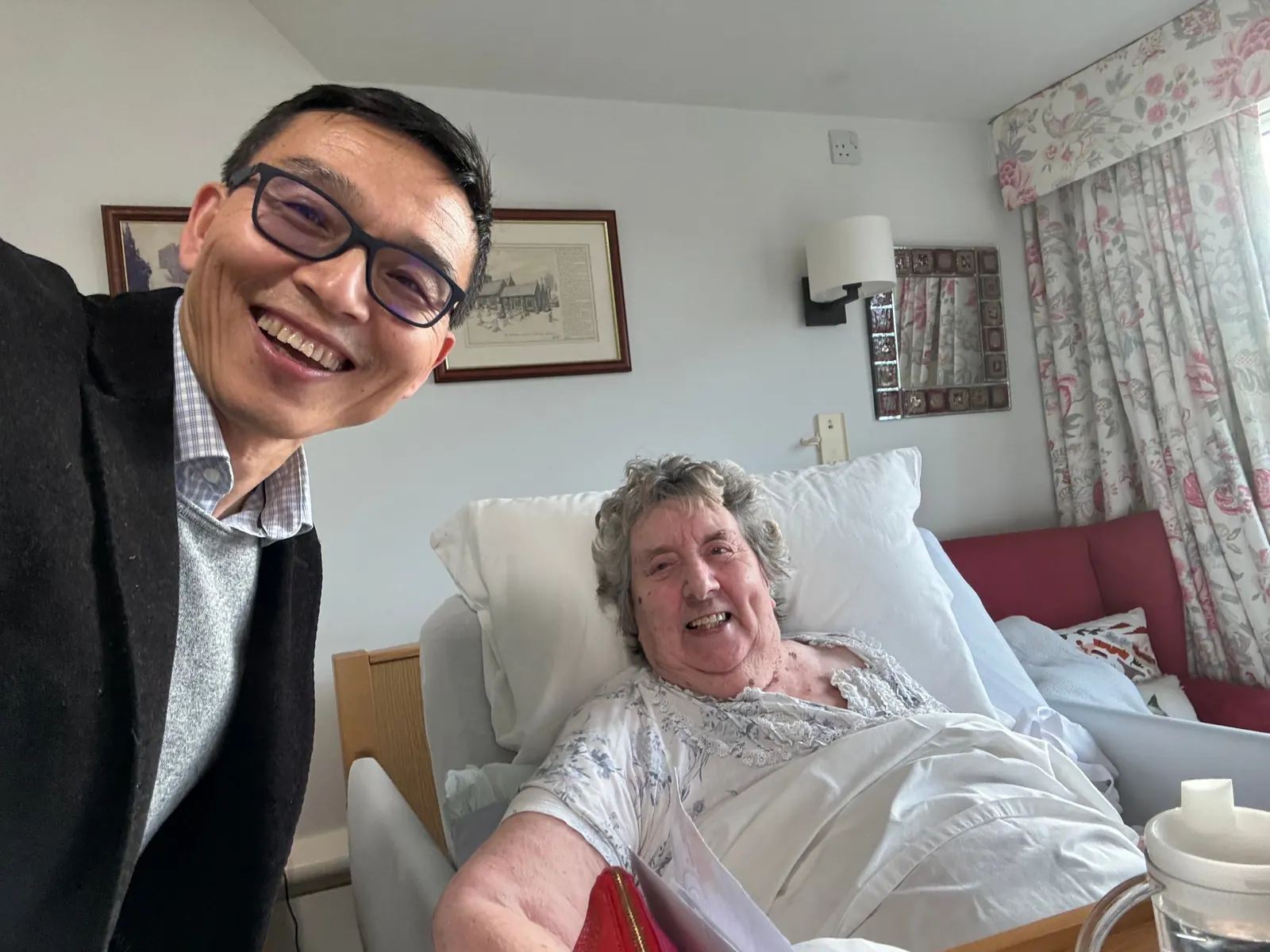
How we help families
We visit them
At home or in their care home, so they don't need to travel.
You can be there
In person, or we can update you afterwards with their permission.
Clear answers
We explain results and options in plain English, with prices in writing before anything is ordered.
We stay involved
Aftercare, maintenance and, in care homes, a short written report for you and the home.
Signs they may be struggling
- The television is louder than it used to be
- They ask you to repeat things, or answer a different question
- They avoid the phone, groups or family meals
- They say people mumble
- They seem tired, withdrawn or more confused after conversations
Free guide: recognising hearing difficulties Hearing care checklist for families
Raising the subject
Choose a quiet moment and talk about a specific situation you've both noticed, such as phone calls or family meals. Suggesting a simple check is often easier to accept than talking about hearing aids, and offering to come along helps too.
Earwax is a common and easily treated cause of muffled hearing, so it's worth ruling out first.
Arranging care in three steps
Tell us about them
Request a callback or ring us. We'll ask a few questions about their hearing, where they live and what would help.
We agree a visit
We arrange a time that suits them, and you if you'd like to be there, and confirm the price.
The visit and next steps
We see them, explain what we found and agree the next steps together.
Consent and decisions
Your relative needs to agree to the appointment. If they can't make the decision for themselves, a person holding a registered Lasting Power of Attorney for health and welfare can consent. For care home residents, the audiologist can otherwise make a best-interests decision under the Mental Capacity Act 2005, after speaking with family and the care team.
What it costs
Earwax removal at home or in a care home is £158.50. Hearing aids start from £1,995 a pair, including the assessment, fitting and Essential aftercare. See all prices.
Hear4All is a private service. NHS hearing tests and hearing aids are free through your GP, although waiting times vary. We are happy to explain both routes.
Request a callback
Leave your details and we'll contact you using the method you prefer. Please don't include medical details.
This form is provided by Typeform. If it doesn't load, open it in a new page or call 023 8244 4045.
Their care home already works with us? You can also refer a resident online.
Questions families ask
Can family members attend an appointment?
Yes, and we encourage it. A family member or friend can help describe the difficulties, ask questions and remember the advice, at the clinic, at home or in a care home. If they can't be there, we can update them afterwards with your permission.
Can you visit my parent in a care home?
Yes. We visit care homes across Southampton and nearby Hampshire. You can refer your parent online or call us. We need their consent, or that of someone with Lasting Power of Attorney for health and welfare, before the visit, and afterwards we can share a short written summary with you and the home.
Who can sign the consent form for a care home resident?
The resident, if they can make the decision themselves. If they can't, a person holding a registered Lasting Power of Attorney for health and welfare can consent. Otherwise the audiologist makes a best-interests decision under the Mental Capacity Act 2005, after speaking with family and the care team.
Can you visit me at home?
Yes. Home visits are a central part of what we do. Our audiologist can visit you at home across Southampton and nearby Hampshire, including Eastleigh, Chandler's Ford, Romsey, Totton, Winchester and the New Forest, for hearing assessments, hearing aid fittings and aftercare, and earwax removal. Earwax removal at home is £158.50, and hearing aids cost the same at home as in the clinic.
Can I get hearing aids on the NHS instead?
Yes. NHS hearing aids are free through a GP referral, although waiting times vary and the choice of models is smaller. We are happy to explain the NHS route as well as our private options.
What happens if my hearing aids are lost or damaged?
With Premium aftercare, a lost or damaged hearing aid is replaced. Without it, a replacement has an access fee of 50% of the purchase price of that hearing aid. The manufacturer's guarantee covers faults, not loss or accidental damage. Labelling and an anti-loss string (£19 per aid) help prevent losses, especially in care homes.